
For a business running Instagram in two languages, we would base the account structure on the offer and the people who can support it. A shared account is a reasonable starting point when both audiences can buy the same thing and receive an answer. Different local offers can justify separate accounts, provided each has someone to check posts and handle enquiries.
The question comes up when a post is ready: should the other language go underneath, into another post, or onto another profile? Before changing the accounts, write down what you invite the customer in each language to do. That gives the decision a basis you can inspect.
Should you keep Instagram in two languages on one account?
Consider a shared account when the languages describe the same service, area and next action. Consider separate market accounts when local offers or communication needs differ enough to warrant their own presence. In either case, check that someone can approve the wording, keep the offer current and answer the messages that follow.
Imagine a workshop serving neighbours who use different languages. The work, booking route and service area might be shared.
Now imagine branches with different availability and local events. Their language may be the same, while the information customers need is different. These are hypothetical situations to compare with your own business.
| A shared account may fit | Separate accounts may fit |
|---|---|
| The same offer serves both audiences | Local offers or availability differ |
| The same posts describe the offer accurately to both audiences | Each market needs different availability, event or contact information |
| A team can check and answer both languages | Someone is responsible for each account |
If nobody is named to answer messages in that language, prepare that part of the service before promoting it. Creating a profile does not assign that responsibility. Keep any existing inbox attended while you decide what to change.
What can Instagram translation help with?
Translation tools can assist with a particular video or message. Meta’s Reels announcement describes audio translation and dubbing, with an option to match the translated speech to the speaker’s mouth movements. It says the tool is free for public Instagram accounts in countries where Meta AI is available. Check the controls and eligibility in your account before planning to use it.
Meta’s announcement about direct messages describes a manual action: hold a sent or received message in another language and choose Translate. The translated version appears beneath the original. For your business plan, still name the person who will assess the request and give an accurate answer.
Ask a competent language reviewer to check the actual material you intend to publish, including any wording inside an image or video. Have the reviewer confirm what you offer, where it is available and what the customer should do next. Treat a translated asset as something to review before relying on it.
Complete the worksheet before opening another account
Make a copy of this worksheet for each language audience. Use the offer you can actually fulfil and the people available to support it. Leave an unknown answer visible until the responsible colleague resolves it. This is our suggested decision method; it is not a platform rule or a tested formula for growth.
| Field | Your note for this language |
|---|---|
| Offer | What can this customer buy or book? |
| Service area | Where is that offer available? |
| Check the wording | Who checks the meaning and current availability? |
| Replies | Who answers, and who covers an absence? |
| Next page or contact | Which page or enquiry route matches the offer? |
| Review again when | What change or observed problem would reopen the decision? |
Then record the choice and its conditions:
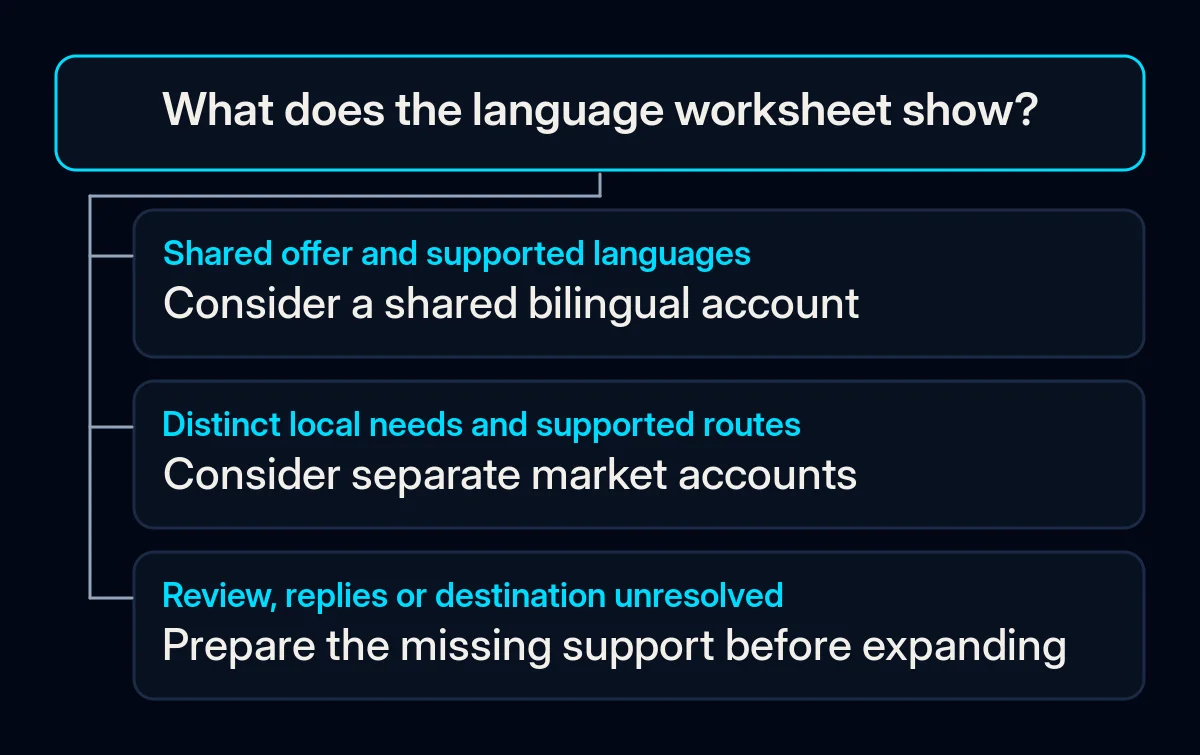
- Keep a shared account if the offer makes sense for both audiences and someone can check the wording and answer in each language. Decide how each post will make its intended audience and action clear.
- Prepare separate market accounts if distinct local needs justify them and each has someone to check posts, answer messages and maintain the correct page or enquiry link. Write down the purpose of each account so the team can recognise what belongs there.
- Defer the extra account if review, replies or the destination are unresolved. Specify what needs preparing and who will do it. Keep the offer you can currently support clear.
A difference in a field does not automatically require separate accounts. Weigh all the conditions before deciding. A shared offer can still need local communication. Make those responsibilities clear in the brief for social media management before deciding which account structure fits.
Follow the customer route in each language
Before settling on a shared account or separate accounts, follow the path from a post to an answer. A customer should be able to recognise the offer, reach the appropriate destination and get a response in the language you have invited them to use. Trace the actual route on a phone and write down any break.
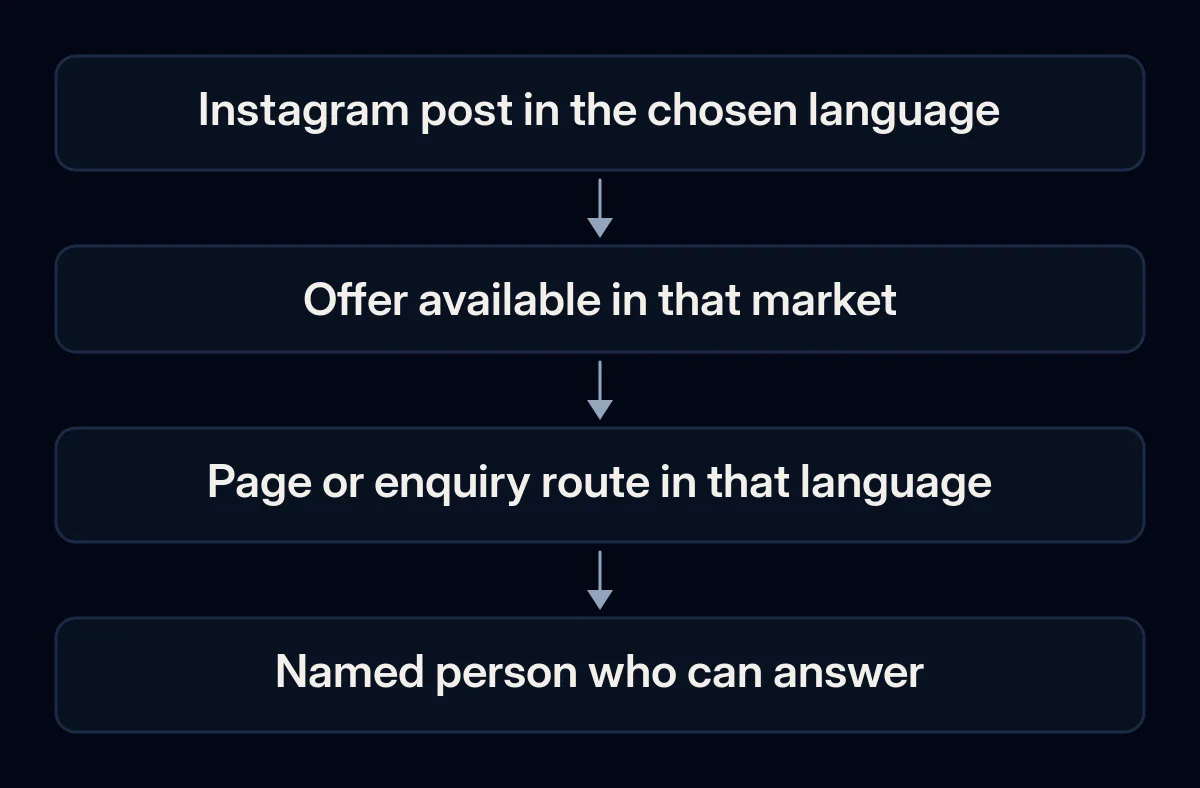
- Read a proposed post in each language. Check the visual as well as the accompanying text: what can the customer buy, where, and what action follows?
- Open the profile as a visitor. Check whether its explanation and destinations make the relevant offer easy to identify. For separate accounts, make the market or service boundary clear.
- Follow the actual link or enquiry route. Check that the offer remains valid and the customer can continue in the intended language. W3C’s language-navigation guidance advises visible language links even when a website selects a language automatically.
- Ask the person responsible for replies to explain how they would handle that enquiry and pass it to a colleague when needed. Use a fictional enquiry internally, without sending messages to customers or copying private conversations.
If the website destination is the gap, give its owner the exact page and expected language. Put that requirement in the project brief for multilingual website projects. If customers can follow the path in either language but enquiries still go nowhere, the wider diagnosis is in our guide to social posting without clients.
What would make you change the decision?
Write down the current setup and the problem you want a change to resolve. Choose a review point tied to work you can observe, such as an offer change or the next planned content review. The timing depends on what you can assess. Reopen the decision when an offer, service area or responsible person changes, or when incoming contacts reveal a recurring misunderstanding.
Keep a simple count of relevant enquiries by requested language, wrong destinations, questions about availability and unanswered requests. Note the time spent maintaining the versions and what else changed during the same period. Views alone cannot establish that language or account structure caused a result, and a quiet period leaves demand uncertain.
Use the record to identify an action. Repeated destination problems call for a page or routing repair. Consider a separate account when the shared account cannot present distinct local information clearly and someone can take responsibility for the new account. If both audiences can use the shared offer and get appropriate answers, record those reasons in the worksheet.
Where we come in
We start with your completed worksheets and check whether each audience can use the offer and get an answer. We would then record the chosen account setup, the people who check posts and reply, the page for each language and the reason to revisit the choice. Fill in the names and page addresses you already know, then mark the gaps before opening another profile.