
The European Commission accepted the Temu DSA action plan on 26 October 2026. It addresses Temu’s breach of its duty to examine how illegal products may appear or spread on the marketplace. That examination is its risk assessment. The announcement sets out work for Temu to implement and have checked. If you sell there, distinguish those tasks from any request about your own product offer, or listing.
DSA stands for the EU’s Digital Services Act. The announcement follows the Commission’s May 2026 finding that Temu had failed to meet its risk-assessment duty. ANSA independently reported the acceptance on 26 October. The event concerns the way the platform examines risks across its service.
What the Temu DSA action plan covers
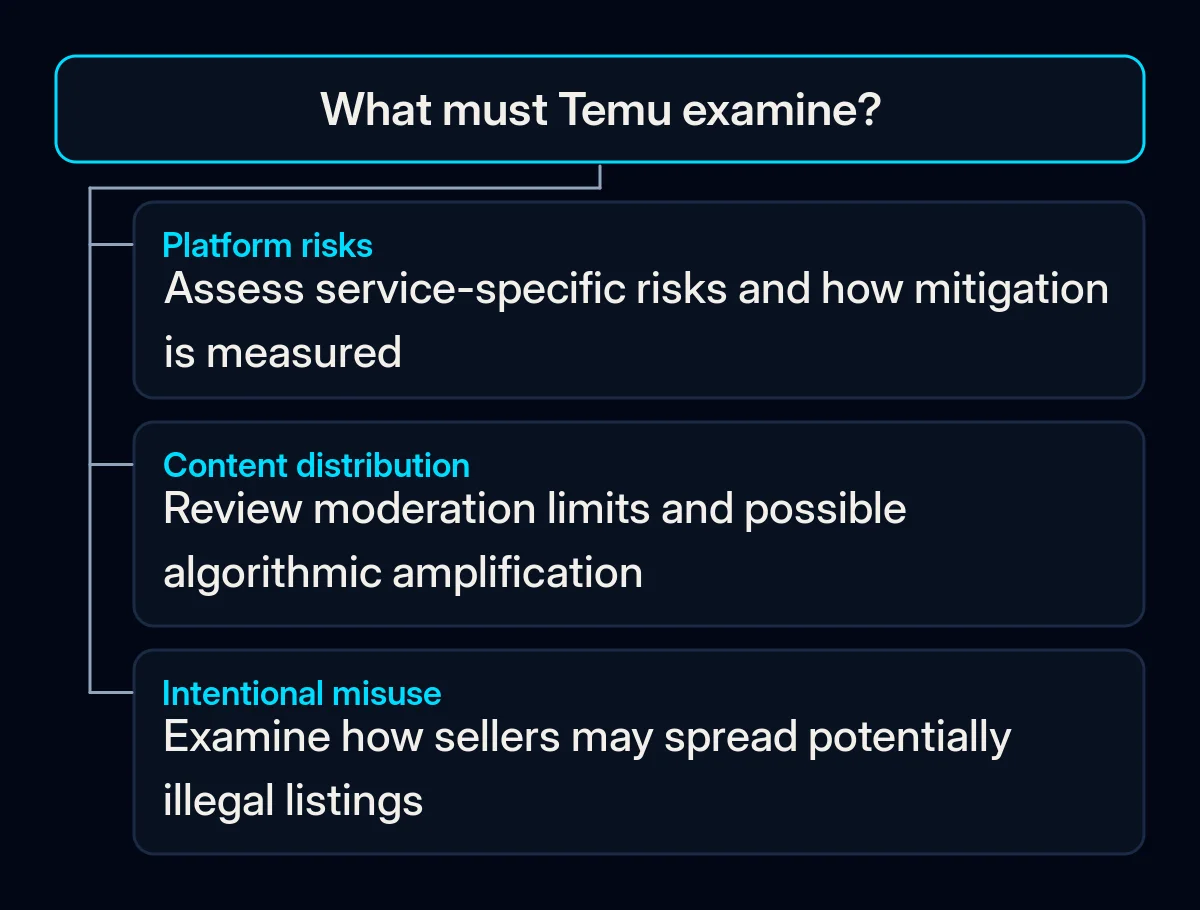
The Commission describes five commitments about how Temu identifies and assesses risks. They cover the design and use of the platform, the effectiveness of its safeguards, and ways potentially illegal listings can spread. These tasks concern the marketplace’s systems. Any request to a seller needs to be read for its own scope and instructions.
According to the published measures, Temu will:
- Assess risks specific to its own service using reliable, current information.
- Use reliable indicators to evaluate whether its safeguards reduce the risk of illegal content spreading.
- Examine the limits of its active checks for problematic content, including effects on recommended products.
- Analyse whether recommendations and other algorithms can amplify illegal content.
- Examine deliberate manipulation, including sellers exploiting platform features to spread potentially illegal product listings.
A recommendation system selects items to show a shopper. The plan calls for analysis of its possible effects. Evidence about a particular listing’s ranking or removal would need to come from records about that listing.
Which dates refer to which work?
The implementation window and the period being assessed describe different things. In its English announcement, the Commission gives Temu four months to implement the plan. Temu’s interim risk assessment must cover a six-month period ending on 30 November 2026. The November date identifies the end of that assessment period.
We would put those descriptions in separate fields in a briefing: time allowed for implementation, and period covered by the assessment. Record the implementation window as “four months”. A precise calendar end date would need an authoritative date beyond the publication day alone.
The next steps include an external, independent audit. The Commission says it will closely supervise implementation. The results of those follow-up checks would be needed to judge implementation.
What does acceptance establish about a product?
Acceptance establishes that the Commission has accepted Temu’s corrective plan. It does not establish the safety or legal status of a product in your catalogue. A seller still needs to distinguish the platform’s assessment process from any question about a particular item, model or version, or a claim published on its listing.
If a marketplace notice reaches your business, keep its wording and read the actual scope, requested action and stated deadline. Use that notice to define the question your team needs to answer.
Keep regulatory questions separate, too. The EU customs reform for marketplaces concerns another subject. Keep customs, packaging and product-specific questions in their own workstreams.
What it means for your business
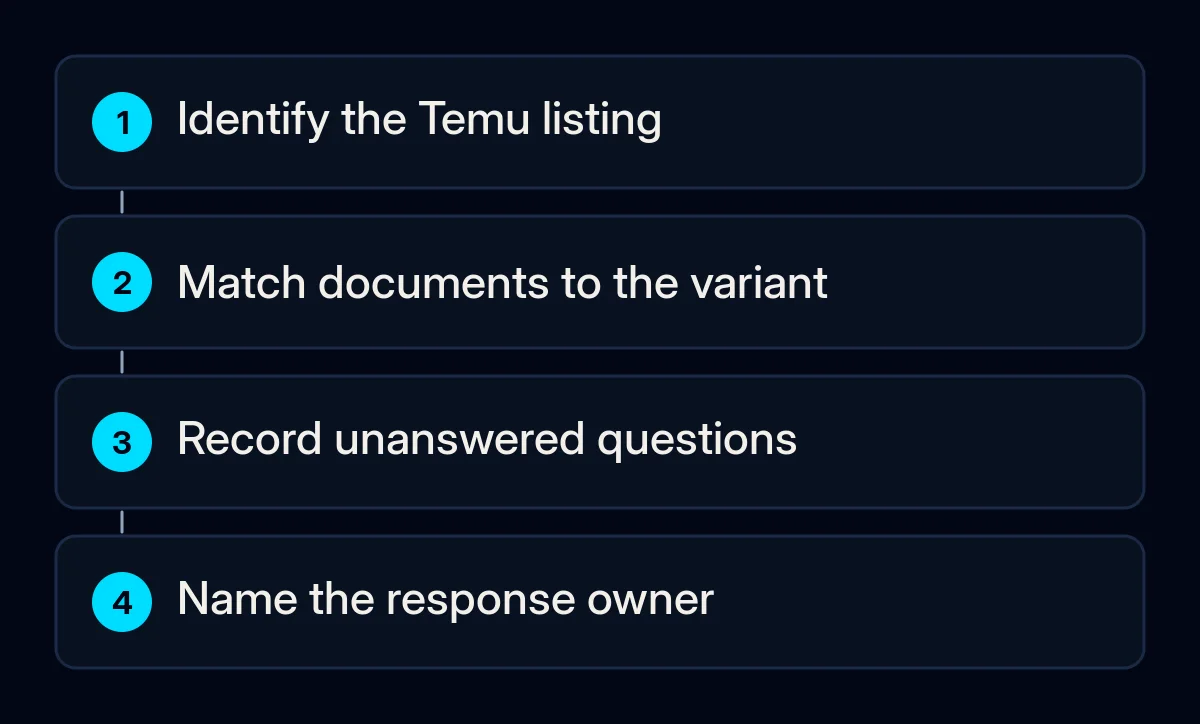
Our practical suggestion is to prepare the records behind a listing you maintain. This organisation method uses information you already hold to connect the offer, its supporting material and the person handling questions. Its purpose is to make an unanswered question visible and give someone responsibility for resolving it.
- Identify the listing and variant, meaning the model or version sold. Save its identifier or URL, market, language and current wording. Check that the records you are collecting concern the same item.
- Match the documents already held. Record where each document is stored and which model or version it covers. Mark any mismatch.
- Write down the open question. If a claim on the page lacks support, or a document’s applicability is unclear, record the question for a qualified specialist. Ask that specialist to explain what a test or certificate supports before updating the claim.
- Name the response owner. Decide who will read an actual marketplace request, gather the relevant material and coordinate any reviewed update to the listing.
Use the systems you already have for this preparation. In our ecommerce website work, catalogue fields and displayed product information are part of the technical task. Our workflow and integration work can connect those records with the people handling questions. Assessing product safety and interpreting product-specific requirements need the relevant specialists.
Check the result by trying to retrieve the listing version, its supporting records and the unresolved question together. If the team can find them and identify the response owner, the preparation has produced a usable record. Keep the unresolved question and the next action visible to that person.