You ask three suppliers what an online shop would cost and get three answers that have almost nothing in common: one is a small monthly fee, one is a mid-sized project, one looks like a house deposit. Nobody explains why, and the cheapest one feels like a trap. If you are trying to understand ecommerce website cost before you commit, the first thing to know is that the quotes differ because each supplier is quoting a different shop, not because someone is cheating.
The usual conclusions are that agencies overcharge, that a template will do for now, or that you should wait until you can afford the expensive version. Any of those can be right. But the price is driven by a short list of things you can count yourself in an evening, and once they are written down, the three quotes suddenly line up.
Why ecommerce website cost varies so much
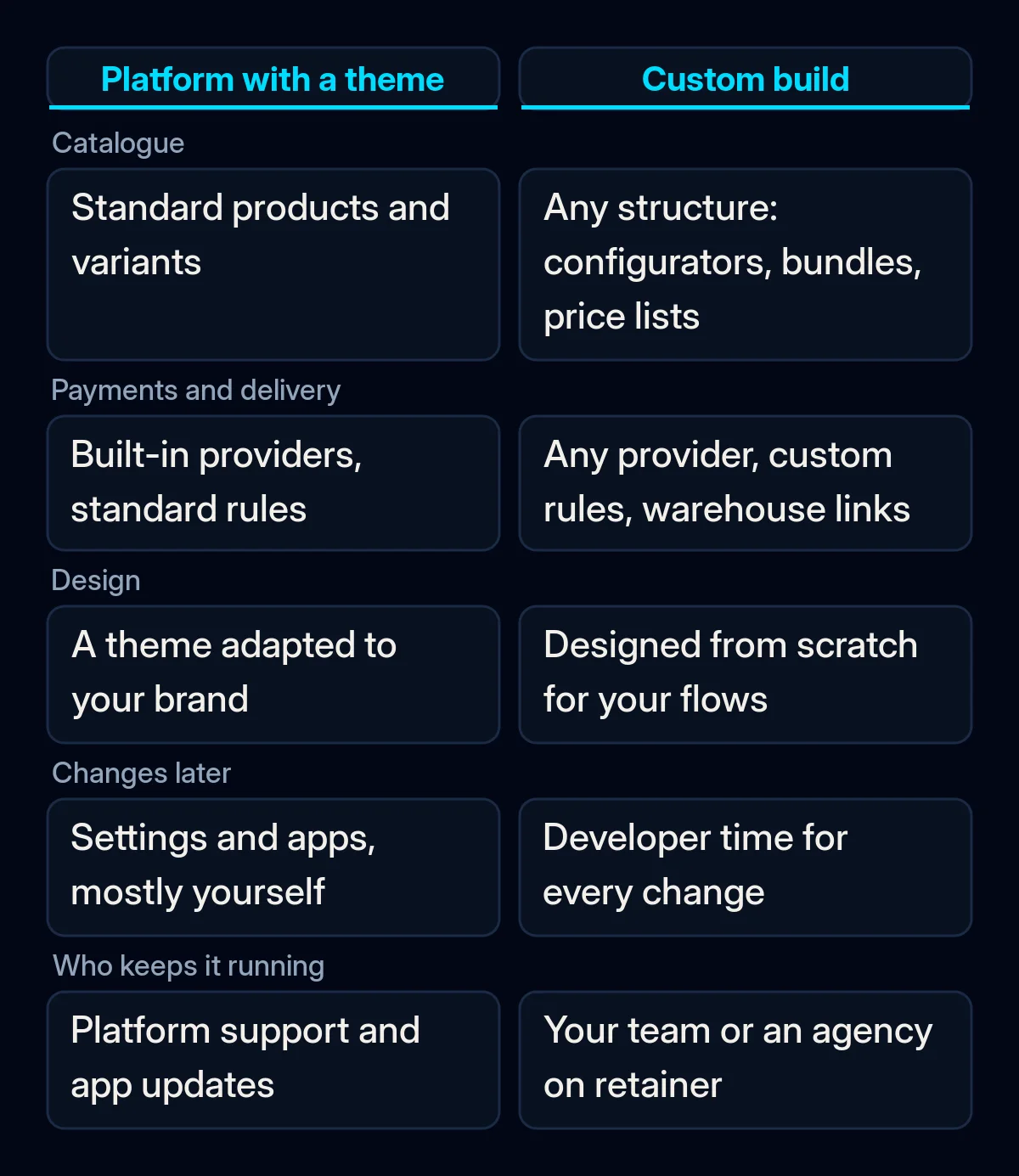
The catalogue decides the shape of the build. A few dozen products with simple variants fit any platform’s theme. Thousands of items, configurable products, bundles, wholesale price lists or products that depend on each other push the shop out of what a theme can do and into development. The sign: your product list needs a spreadsheet with more than a handful of columns to describe.
Payments and delivery are integrations, not checkboxes. Standard card payments and one courier are built into every platform. Several payment providers, invoice terms for business buyers, delivery rules by weight and region, pickup points, or a link to a warehouse system each add work and each add ongoing fees. The sign: you already know the names of three or more providers you cannot do without.
Design is a level, not a yes or no. A theme adapted to your brand is the cheapest layer; a custom design of the product page and checkout costs more; a shop where every flow is designed for your product costs the most. The sign: when you look at competitors’ shops, the thing you dislike is the layout itself, not the photos.
Content and languages are usually missing from the quote. Product photos, descriptions, size guides, legal pages and translations are either your work or paid work, and a shop without them does not sell. Every extra language and currency multiplies the content and adds settings for tax and delivery; we wrote about that in selling in a second country with a multilingual shop. The sign: nobody has said who writes the product texts.
Somebody has to run the shop after launch. Adding products, changing prices, answering orders, updating the platform and its apps. A platform shop can be run by the owner; a custom build needs a developer for many changes. The sign: the quote has no line for the months after launch.
How to tell which one is yours
Before asking anyone for a quote, spend an evening on your own numbers and needs. Go in order; the first item that surprises you is usually the one that will move the price.
- Count products and variants. Open your current list, or the supplier catalogue you will sell from, and note how many items, how many options per item and whether any product depends on another. If the answer is “a lot” or “it depends”, write down why.
- List every payment and delivery provider you need. Card, wallets, invoice, instalments; couriers, pickup points, your own drivers. Mark which ones are non-negotiable for your customers.
- List countries, languages and currencies. Where you deliver, in which language you must sell and in which currencies you must show prices. Each row is a multiplier.
- Find where stock, prices and orders live today. A spreadsheet, an accounting program, a warehouse system, a supplier feed. If the shop must stay in sync with one of them, the integration is part of the price.
- Decide who does the content. Photos, texts, translations, legal pages. Yourself, your team, or paid for.
- Look at five shops you admire and name what you like. If it is the photos and the products, a theme will do. If it is the way the pages work, you are looking at design cost.
The fix, in order
Cheapest first. Most of the savings come from scoping, not from bargaining.
- Write the answers above on one page. This is your brief. Every supplier now quotes the same shop, and the quotes become comparable. Our brief asks these questions in the same order.
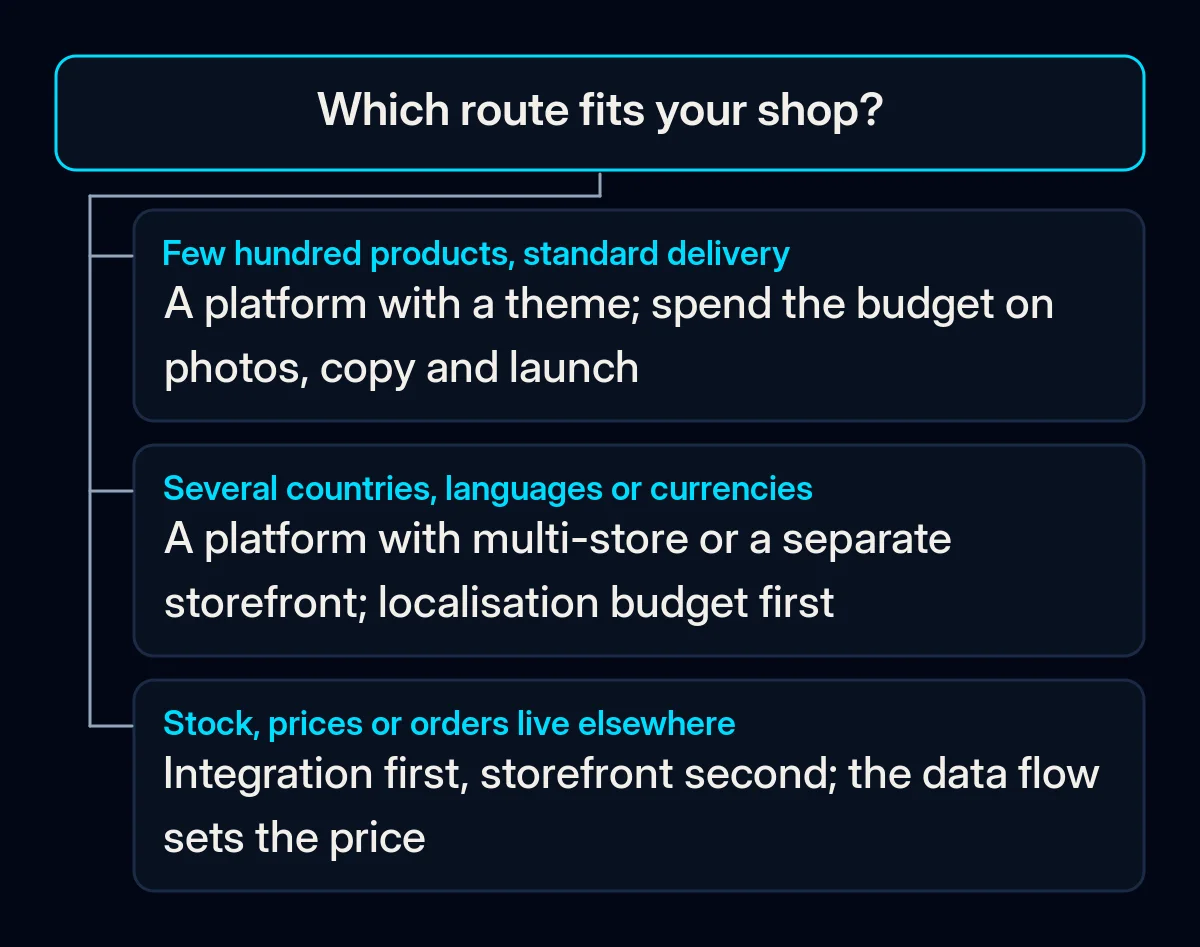
- Start from a platform unless a checked reason forbids it. Standard catalogue, standard payments, one or two countries: a platform with a theme gets you selling, and the money goes into photos, texts and launch instead of code.
- Spend on design only where customers decide. Product page, cart and checkout are where design pays back; the about page can stay a theme. In our ecommerce website projects this is where custom work starts, not with the home page.
- Add integrations one at a time, in order of pain. Payments first, then delivery, then the system that holds stock or orders. Connecting the shop to where orders and customers are recorded is usually the step where our CRM and analytics projects come in, because the same link later tells you which products and channels actually pay.
- Budget the months after launch before you sign. Platform fees, apps, payment fees and the hours someone spends running the shop. If that line does not exist, the quote is incomplete.
- Keep the door open to grow. Choose a platform or a build that can add a language, a currency or a warehouse link without starting over. A slow or hard-to-change shop costs more than its price; we described the customer side of that in why a slow website costs you customers.
What to measure
- Whether the three quotes describe the same shop, once your brief is written; if they still differ, ask which of the five items each one assumed.
- Time from a product change to it being live, weekly, after launch; if it needs a developer every time, the build is wrong for your team.
- Share of orders that needed a manual step in payments, delivery or stock, monthly; each manual step is an integration you paid for and did not get.
- Ongoing monthly cost against the plan you wrote before signing, monthly.
Where we come in
An owner with an evening can count the catalogue, list the providers and languages, find where orders live and decide who does the content; with that page in hand, most of the price is already explained. What we bring is the order of work: platform or custom by checked reasons, design only where customers decide, integrations in order of pain, and a shop that can grow without being rebuilt. If you would rather have us scope it with you, a short brief with your product count and providers is enough to start.