OpenAI changed ChatGPT Ads bidding on 9 November. If you set a cost target for a new campaign, choose Target CPC for the average cost of a click or Target CPA for the average cost of an action such as a purchase or enquiry. If you already use Max CPC or Max Bid, start by recording what you actually paid for the same result before switching. OpenAI says those older options retire for existing campaigns on 1 January 2027.
What changed in ChatGPT Ads bidding?
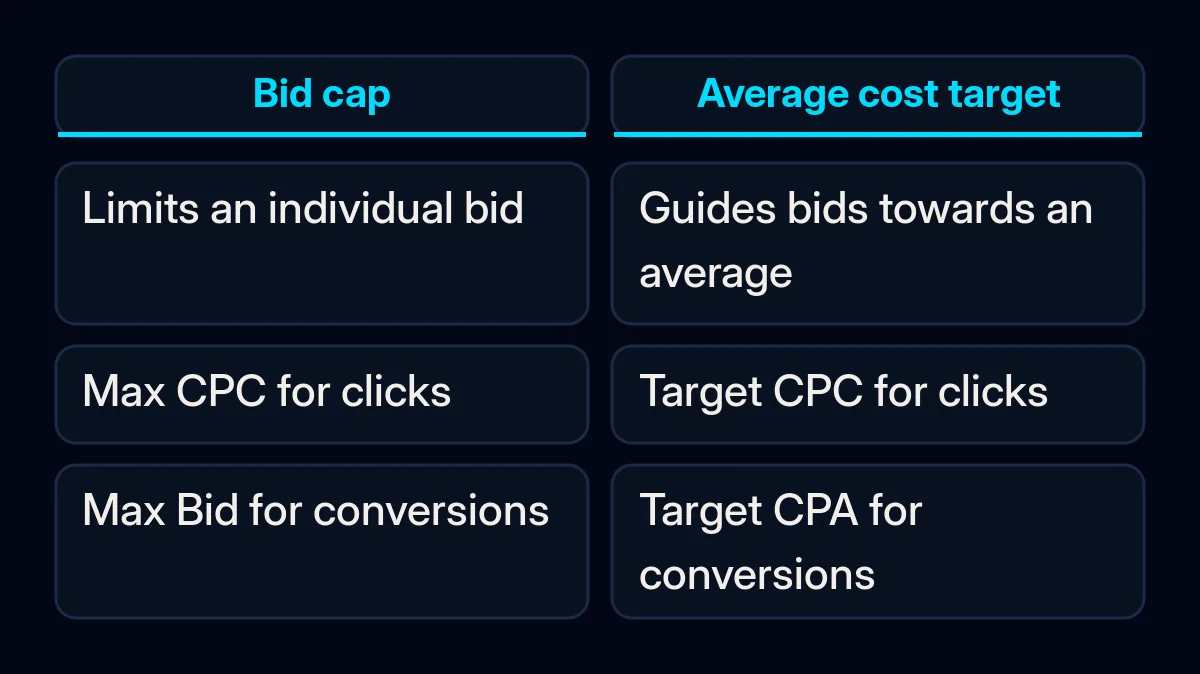
The old controls capped individual bids. The new targets tell OpenAI what average cost to aim for across clicks or conversions. The system can bid above or below your target in each auction, so individual costs and the actual average can both differ from the figure you enter.
| Campaign goal | Previous bid control | New option if you set a cost target |
|---|---|---|
| Get clicks | Max CPC caps an individual click bid | Target CPC aims for an average cost per click |
| Get a defined action | Max Bid caps the auction bid | Target CPA aims for an average cost per action |
OpenAI’s bidding guidance gives the transition dates. The advertiser notice reported by Search Engine Land also says Target CPC takes the place of Max CPC for new click campaigns. OpenAI calls its option without an explicit cost target Intelligent bidding, previously Maximize Results.
Write down your budget. Next to it, record what triggers a charge. OpenAI says a campaign that optimises for purchases can still bill for clicks or impressions, depending on the billing setting you choose. The target tells the system what average cost to aim for.
What should you check before switching?
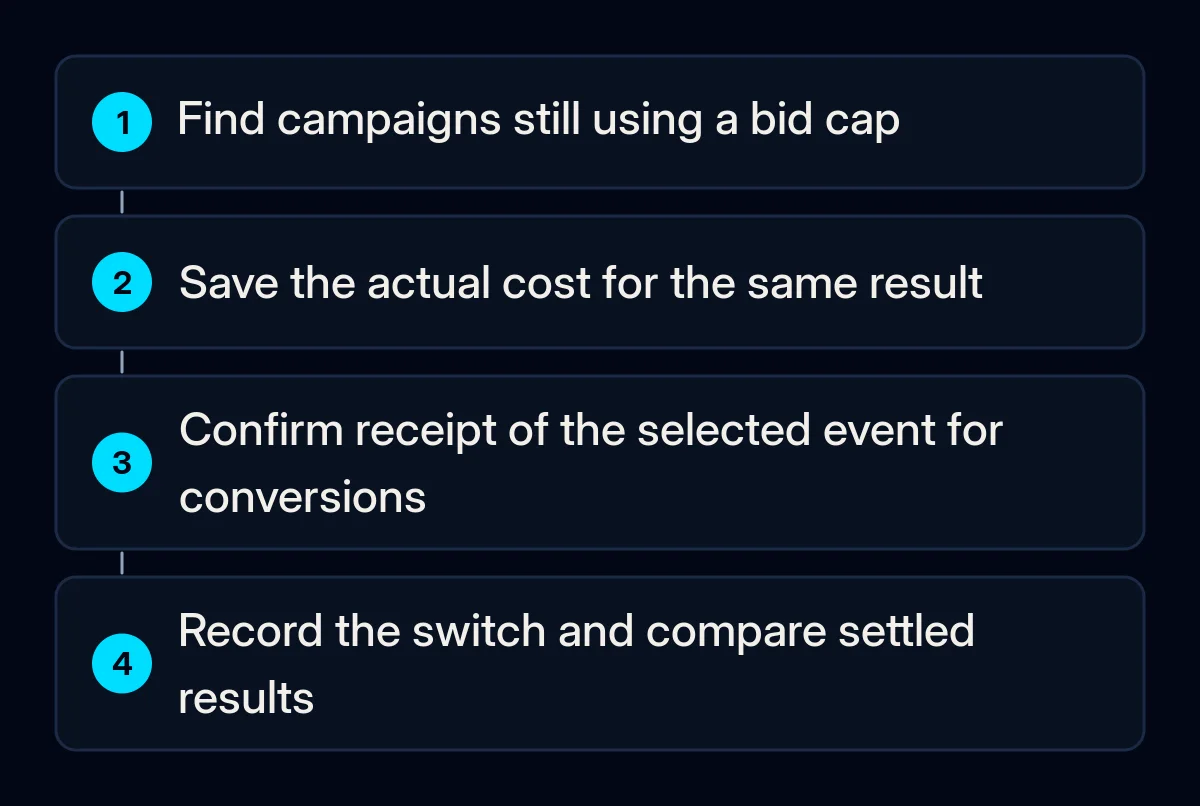
In Ads Manager, find the campaigns still using a bid cap and save the recent average cost for the result already counted by each one. Compare that figure with what a click or enquiry is worth to your business before choosing a target.
- Write down the starting setup. Make a row for each affected campaign or ad group. Record the strategy, budget, billing event, market and the exact result you count. In our paid advertising campaign checks, we keep the old bid in a separate column from what the account actually spent.
- Take a comparable cost reading. Save spend, result count and average cost over complete days. For clicks, look at average CPC, or cost per click. For conversions, compare spend against attributed counts for the same event. Use the same dates and the same rules for which ads get credit. OpenAI’s reporting guide explains why recent results can still change. If the data is too thin, record that gap before choosing a target.
- Check that the selected action arrives. For a campaign aimed at enquiries, submit a form with approved test details under your site’s usual consent settings. Confirm the business received it. Then check that the data source linked to the campaign receives the selected event through OpenAI Pixel or Conversions API. This is the same receipt check we use in CRM and conversion measurement. A received event and a conversion credited to an ad are separate observations. OpenAI’s Event Quality Score describes the usefulness of event data. Check the event count separately.
- Move one group first if possible. Record the date and keep the budget, outcome and other settings steady where practical. After the figures have had time to settle, compare spend, result count and actual average cost using the same report settings. If delivery drops, OpenAI advises checking for a restrictive target or weak conversion signals. Check whether anything else changed before adjusting the bid again.
Barn2’s Katie Keith described checking ad clicks against site analytics in an earlier campaign. Keep those observations in separate columns if you do the same. To understand how buying access opened, see our earlier coverage of ChatGPT Ads self-serve in Europe.
When does the API transition start?
If a partner or tool manages your ads through the API, ask which fields it sends from 18 November. OpenAI says that from that date, using an old field to create a campaign or change an existing ad group’s bid type selects the corresponding cost target. OpenAI supports the old fields through the end of December. It deprecates them on 1 January 2027. If your account uses a partner, ask them to confirm the strategy their software actually returns after a change.